
Mortgages with a CCJ
Can you still get a mortgage if you have a CCJ against your name? It is not necessarily impossible to obtain a mortgage with a County Court Judgment (CCJ) against your name, but it can be significantly more challenging. Ultimately, the decision to offer a mortgage to someone with a CCJ will depend on the individual lender’s criteria and risk assessment.
Why a CCJ doesn't mean the end for your mortgage hopes
Having a County Court Judgment (CCJ) against your name may make it more challenging to get a mortgage, but it is not impossible. A CCJ is a court order that can be issued against you if you have failed to repay a debt, and it will appear on your credit report for six years from the date of issue.
Why is it a bad thing?
Lenders will typically view a CCJ as a negative factor when assessing your creditworthiness, which may affect your ability to get approved for a mortgage. However, the severity of the CCJ, the amount owed, and how recently it was issued can all impact how much it affects your creditworthiness.
How do I get rid of a CCJ?
If you have a CCJ against your name, you should repay the debt as soon as possible, as this can help improve your credit score and make it easier to get a mortgage in the future. You should also seek the advice of a mortgage broker, who can help you find lenders more likely to approve your application, given your circumstances.

What is a CCJ?
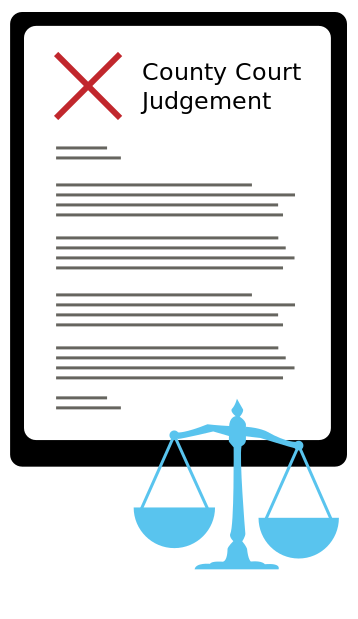
A CCJ is a court order that can be issued against you if you fail to repay a debt. It is a legal judgement made by a county court in England, Wales or Northern Ireland and can be issued against individuals or businesses.
When would it be issued?
A CCJ is usually issued when you have yet to respond to a court claim or make arrangements to pay the debt you owe. However, it can also be given if you have broken the terms of a repayment agreement. Once a CCJ is issued against you, it will be recorded on your credit report for six years.
What’s detailed on the Judgement?
The CCJ will outline the amount you owe and the repayment terms, including how much you must pay and when the payments are due. Responding to a CCJ as soon as possible is essential, as failure to do so can lead to further legal action being taken against you, such as bailiffs being sent to your home to collect the debt.
Will the age of the Judgement affect my chances?
The age of the CCJ will depend on the specific lender’s criteria, but in general, the longer ago the CCJ was issued, the less impact it will have on your credit score and the more likely you are to be accepted for a mortgage.
When can I be considered for a mortgage again?
Most lenders require the CCJ to have been satisfied (paid off) for at least 12 months before they will consider an application for a mortgage. Under certain circumstances there are a small number of lenders who will consider an application if you have recent unsatisfied CCJ’s on your credit file. However, some lenders may be more lenient and consider applicants with a satisfied CCJ that is as recent as 6 months old. Once a CCJ is two years old, there are lenders who will consider an application even if the CCJ has not been satisfied. You should seek the help of a bad credit mortgage broker, who can help you find lenders more likely to approve your application.
What else is taken to account when applying for a mortgage?
It is worth noting that having a CCJ on your credit file is just one of many factors that lenders consider when assessing mortgage applications. Other factors such as income, employment status, and overall creditworthiness will also be taken into account.
As a mortgage is secured against your property, it could be repossessed if you do not keep up mortgage repayments.
Story video